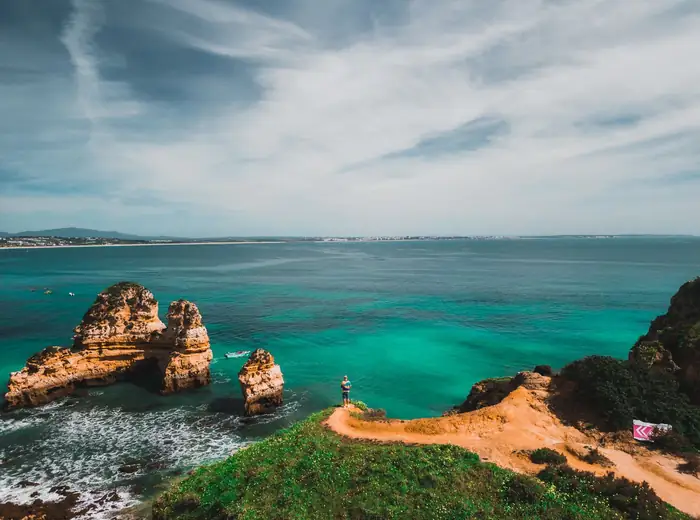
In short
The Algarve packs its best experiences into a 150 km stretch of coast and hills: boat trips to the Benagil sea cave, dolphin-watching off Albufeira and Lagos, kayaking under the cliffs of Ponta da Piedade, jeep safaris into the Monchique mountains, Atlantic surf on the Costa Vicentina, and day trips to Seville and Lisbon. Most run from spring to autumn, peak in –, and start within an hour of Faro airport.
- Most iconic
- Benagil sea cave, by boat or kayak
- Peak season
- July–August · book ahead
- From Faro airport
- Most tours within ~1 hour
- Best for
- Couples, families & active trips
What are the best things to do in the Algarve?
The best things to do in the Algarve fall into three worlds that sit close together: the cliff coast of the central and western shore, where boat and kayak trips reach sea caves like Benagil; the Ria Formosa lagoon and barrier islands of the east; and the Serra de Monchique hills inland. Pick one experience from each and you have seen the region at its most characteristic.
If you do just five things
- Benagil sea cave by boat or kayak — the coastline the Algarve is famous for
- Ponta da Piedade at Lagos — golden cliffs, best by kayak at dawn
- A dolphin-watching trip from Albufeira, Lagos or Vilamoura
- Cabo de São Vicente at sunset — the south-west tip of Europe
- A day in the Monchique hills — jeep safari, mountain spa and medronho
Match it to your trip
The table below is a shortcut: it pairs each headline experience with the traveller it suits, where it concentrates, and the months it works best.
| Experience | Best for | Where it concentrates | Best season |
|---|---|---|---|
| Benagil cave boat & kayak | Couples, photographers | Carvoeiro, Benagil, Portimão | Late spring–early autumn |
| Dolphin watching | Families, first-timers | Albufeira, Lagos, Vilamoura | April–October |
| Kayak & SUP (Ponta da Piedade) | Active couples, groups | Lagos | May–September |
| Jeep safari | Nature lovers, foodies | Monchique, Fóia, Silves | Year-round |
| Surfing | Beginners and pros | Sagres, Arrifana, Amado | Autumn–spring swell |
| Water parks | Families with children | Lagoa, Alcantarilha, Guia | June–September |
| Day trips (Seville, Lisbon) | Culture seekers | Eastern border & north | Year-round |
| Sunset cruise | Groups, couples | Albufeira, Vilamoura, Lagos | May–September |
If you only have a day on the water, Benagil and the cliffs around Carvoeiro are the postcard the Algarve is known for. Travelling with children? A dolphin trip and a water park will carry the week. The sections below break each of these down.
Sea caves and the cliff coast
The Algarve's signature is its ochre limestone coast, and its two set-pieces — the Benagil cave and the stacks of Ponta da Piedade — sit within half an hour of each other on the central and western shore.
Benagil, the domed sea cave
The Algar de Benagil — a domed sea cave with a natural skylight and a hidden beach — is the Algarve's most photographed corner. You reach it from the water on a boat or cave tour from Benagil, Carvoeiro or Portimão, or under your own power on a kayak or SUP tour.
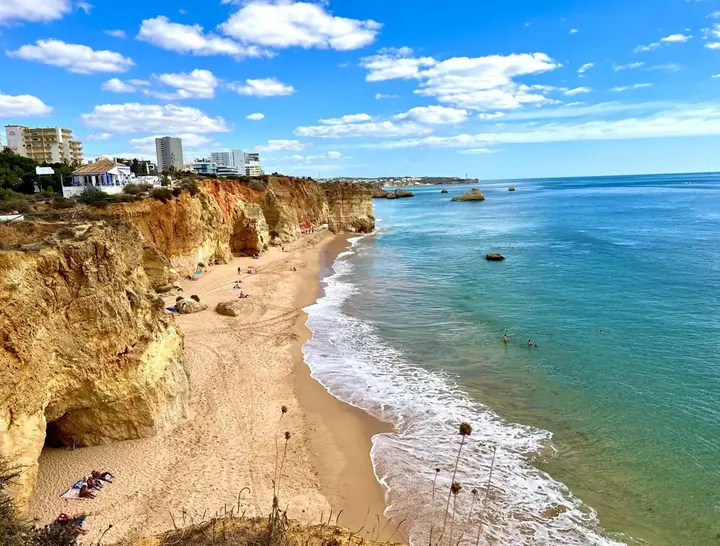
Access rules inside the cave have tightened in recent years: swimming in or landing on the inner beach unsupervised is now restricted, so go with a licensed operator for the reliable, legal way in.
Ponta da Piedade and the cliff walks
A little further west, the honey-coloured stacks of Ponta da Piedade at Lagos are the other must-see, best seen by kayak at first light. If you would rather stay dry, the nearby Praia da Marinha and the Seven Hanging Valleys trail take in the same coast on foot.
Which type of boat tour should you choose?
Boat trips are the Algarve's headline activity, and the format matters more than the price. Here is how the main options stack up:
- Grotto boats — short one-to-two-hour hops from Benagil and Carvoeiro straight to the cave. The most direct way to see Benagil, and the easiest with young children.
- Catamarans & coastline cruises — leave from Portimão, Albufeira and Lagos, cover far more shore, and usually add a swim stop and shade on deck. Best for a relaxed half-day.
- Kayak & SUP — reach inlets the motorboats cannot, on calmer mornings and with a little effort. The closest you get to the rock.
- Dolphin-and-cave combos — push further offshore for wildlife as well as the caves.
- Private charters — flexibility over route and timing for a group.
How to choose
As a rule of thumb, take a grotto boat or a kayak for Benagil itself, a catamaran for a leisurely cruise, and a dolphin combo when wildlife tops your list. Whatever you choose, book a morning departure — the seas are calmest and the light is at its best.
What to bring and how tours work
A little preparation goes a long way. Most water-based tours meet at a marina or a named beach, not at your hotel — though operators in the larger resorts often offer a pickup, so check when you book. Pack the essentials:
- Water, high-factor sun protection and a hat
- A dry bag for your phone and valuables
- Non-slip shoes for kayaking and the cliff trails
- A light layer — mornings at sea are cooler than the beach
How the tours run
Coastal trips depend on the sea, so a rough forecast usually means a reschedule rather than a refund. Children are welcome on nearly all boat tours, with life jackets provided, but confirm any minimum age for kayaks and faster RIB trips.
Wildlife on the water: dolphins and the Ria Formosa
Dolphin watching
Dolphin-watching trips leave the marinas of Albufeira, Lagos, Portimão and Vilamoura in search of resident common and bottlenose dolphins. Sightings are frequent from April to October but never guaranteed — reputable operators run on a marine-life code and will tell you so before you book.
The Ria Formosa lagoon
The calmer counterpart sits in the east. The Ria Formosa is a protected lagoon of channels, salt pans and barrier islands stretching from Faro to Tavira, home to seahorses, flamingos and clams. Small-boat and solar-ferry trips from Faro and Olhão reach the islands and the birdlife, and make an easy half-day with children.
Inland and active: Monchique, jeep safaris and surf
The Monchique mountains
Turn away from the beach and the Algarve changes character within twenty minutes. A jeep safari climbs the cork-oak and eucalyptus slopes of Monchique to Fóia, at 902 m the highest point in the Algarve, usually stopping for local honey, cheese and a shot of medronho, the regional fruit spirit. The spa village of Caldas de Monchique adds thermal baths to the day.
Surf on the Costa Vicentina
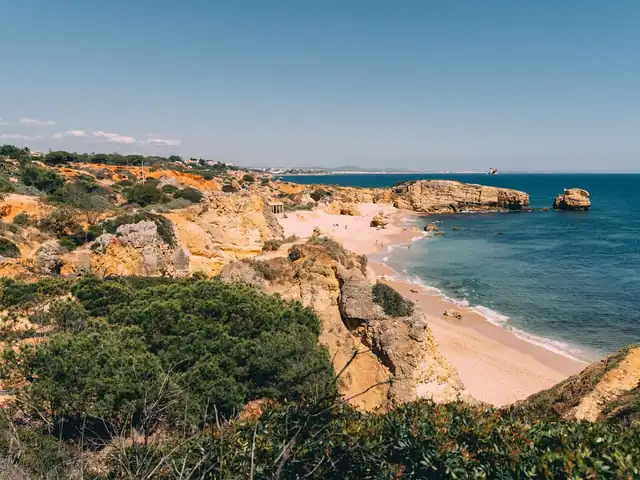
The west and south-west coast is where the Atlantic arrives with force. Surf schools at Sagres, Arrifana and Praia do Amado on the Costa Vicentina teach beginners in summer and chase real swell from autumn to spring. This wilder shoreline, inside a natural park, is also the best of the region for walking and empty beaches.
Things to do in the Algarve with kids
Water parks and family beaches
Families are well served. The region's three big water parks — Slide & Splash near Lagoa, Aqualand at Alcantarilha and the marine park Zoomarine at Guia — run from June to September and fill a full day each. Gentle, shallow beaches such as Praia de Dona Ana, Meia Praia and the eastern island strands suit small children, and a short dolphin or Ria Formosa trip breaks up the beach routine.
Rainy-day ideas
For rainy days, the Moorish castle at Silves, the walled old town of Lagos and a wine tasting in the Lagoa hills keep older children busy without needing sun.
Day trips from the Algarve
Seville, Lisbon and the market towns
Day trips widen the week considerably. Seville lies about two hours east by car or coach across the Guadiana bridge, and Lisbon sits under three hours north on the A2. Closer to home, the Moorish castle and river town of Silves, the market town of Loulé, and the salt-marsh reserve of Castro Marim make relaxed half-days.
The end of Europe
Do not miss Cabo de São Vicente near Sagres — the south-westernmost point of mainland Europe, a dramatic cliff and lighthouse best at sunset. A sunset cruise from Albufeira or Vilamoura closes the day back on the water.
Free and low-cost things to do
On the coast
Much of the Algarve's best costs nothing. The Seven Hanging Valleys Trail from Praia da Marinha is among Europe's finest coastal walks, tracing the cliff tops past Benagil, and the boardwalks around Ponta da Piedade deliver the same golden stacks without a boat ticket. The beaches themselves are free, and the light at Cabo de São Vicente near Sagres at sunset — the south-western tip of Europe — is the region's grandest free spectacle.
Inland and in town
Inland and in town the pattern holds. The walled old quarters of Lagos and Faro, the riverside and Moorish castle at Silves, and the weekly markets of Loulé and Olhão fill half-days for the price of a coffee. Walk the salt pans of the Ria Formosa or Castro Marim for flamingos and waders, and if your trip lands on a village festa in summer, you get live music and grilled sardines at local prices. Budget travellers can build a full week around these without booking a single ticket.
Where to base yourself — and how far from Faro
Almost everything above starts within an hour of Faro airport, so your base shapes your days more than your budget does. Central resorts like Albufeira and Vilamoura put you nearest the tour marinas; Lagos and Carvoeiro sit closest to the cave coast; Sagres trades convenience for surf and space; and Tavira anchors the quieter, island-fringed east.
| Base | From Faro (FAO) | Known for |
|---|---|---|
| Faro | 3 km | Ria Formosa, old town, gateway |
| Vilamoura | 15 km | Marina, golf, sunset cruises |
| Albufeira | 26 km | Central for tours, nightlife |
| Tavira | 31 km | Island beaches, quieter east |
| Carvoeiro | 44 km | Benagil, Marinha, cliffs |
| Portimão · Praia da Rocha | 52 km | Big beach, boat departures |
| Lagos | 63 km | Ponta da Piedade, boat & kayak |
| Sagres | 87 km | Surf, the end of Europe |
Wherever you land, we show the real homes in each town — hand-checked villas and apartments, booked direct with Homing, no platform fees. Compare towns first in our destinations guide, then choose where to stay.
When to go: season by season
The Algarve is Portugal's busiest holiday region. Official INE figures put it at 72.8% hotel occupancy and 27.9% of all overnight stays in the country in , with the average guest staying 3.98 nights — the second longest in Portugal. Demand peaks in July and August, so the shoulder months reward you with the same experiences and more room to enjoy them.
| Season | Sea & weather | Best for |
|---|---|---|
| Spring (Apr–Jun) | Warming up, fewer crowds | Caves, dolphins, hiking, value |
| Summer (Jul–Aug) | Hot, busy, calm seas | Boat trips, water parks, beaches |
| Autumn (Sep–Oct) | Warm sea, quieter, swell builds | Boat trips, first surf, value |
| Winter (Nov–Mar) | Mild, quiet, big Atlantic surf | Surf, Monchique, golf, day trips |
Sea temperature lags the air, so the water is warmest in September; surf is best from autumn through winter; and the caves, dolphins and hiking are at their finest in spring and early autumn. Source: INE / Turismo do Algarve, Sep 2025.
Beyond the coast: golf, food and wine
Two Algarve draws deserve a day of their own.
Golf
The region is one of Europe's premier golf destinations, with more than 40 courses in an hour's drive — the championship links of the Golden Triangle around Quinta do Lago and Vale do Lobo, and the Dom Pedro courses at Vilamoura, chief among them. Winter is prime playing season, when fairways are green and tee times open up.
Food and wine
The other is the table. Algarve food and wine runs from the octopus of Santa Luzia and the cataplana of the coast to the D.O.C. wines of the Lagoa hills and the morning market at Olhão. A guided food or wine tour is one of the easiest ways to eat where locals do rather than where the menus have photos.
Evenings: marinas, nightlife and sunsets
Nightlife by area
The Algarve's nights span the full range. Albufeira's Strip at Areias de São João is the loud end, drawing groups and party nights; the marinas of Vilamoura and Lagos trade the clubs for waterfront dining and cocktail terraces; and Tavira, Carvoeiro and Ferragudo keep evenings quiet, local and low-key. A sunset cruise from Albufeira or Vilamoura is the simplest way to end a day out on the water.
Something more local
For something rooted in place, seek out live fado in the old towns, a seafood dinner in a working fishing village such as Santa Luzia or Ferragudo, or the summer festival calendar that runs through nearly every town from June to September. Where you stay shapes your nights as much as your days, so match the town to the mood you want — our destinations guide spells out which is which.
How to skip the crowds (an honest take)
Popularity is the Algarve's one drawback, and it is easily managed. Reach Benagil at first light or after 5 pm, when the tour fleet thins and the light is better. Avoid the water parks and headline beaches at midday in August; go early or late. For genuine space, head east to Tavira, Cabanas and the barrier islands, or west to the Costa Vicentina — both stay calm even in peak week.
Book the popular tours ahead
Book the signature boat and cave tours online a day or two ahead in summer; the best slots and small-group departures sell out on the day. And keep one inland or day-trip card in hand for the rare grey afternoon.