In short
The Algarve eats from the sea and the hills. On the coast it is fresh grilled fish, clams and the copper-pot cataplana; in the east, the octopus of Santa Luzia and the great market at Olhão; and inland, almonds, figs, oranges and the fiery spirit medronho distilled in the Monchique hills. The wine is the region's quiet surprise — a small D.O.C. Algarve built on the native Negra Mole grape across Lagoa, Lagos, Portimão and Tavira.
- Signature dish
- Cataplana — the copper pot
- The great market
- Olhão, on the Ria Formosa
- Wine
- D.O.C. Algarve · Negra Mole
- Local spirit
- Medronho, from Monchique
How the Algarve eats: sea, hills and market
Algarve cooking is simple, seasonal and built on three larders: the sea, the almond-and-fig hills, and the daily market. Get those three and you have eaten the region properly, from a plate of grilled fish on the sand to a shot of medronho in a mountain village.
The three larders
The coast gives fish, clams and the cataplana; the interior gives almonds, figs, oranges, carob and honey; and the markets of Olhão and Loulé tie it together every morning. Moorish and Atlantic influences run through all of it — sweet almond pastries on one hand, charcoal-grilled sardines on the other.
| Dish | What it is | Where it is best |
|---|---|---|
| Cataplana | Seafood stew steamed in a copper clam-shaped pot | Coast — Alvor, Ferragudo |
| Arroz de marisco | Soupy seafood rice | Coast, everywhere |
| Amêijoas à Bulhão Pato | Clams with garlic, coriander and white wine | Coast |
| Sardinhas assadas | Charcoal-grilled sardines | Summer, coastal towns |
| Polvo | Octopus, grilled or in salad | Santa Luzia, the east |
| Percebes | Gooseneck barnacles | West coast — Sagres |
| Xerém | Cornmeal porridge, often with clams | Traditional, inland & coast |
| Dom Rodrigo | Egg-thread and almond sweet | Lagos and the east |
| Queijo de figo | Pressed fig-and-almond “cheese” | Inland almond country |
| Medronho | Arbutus-berry fruit brandy | Monchique, the sierra |
The sections below take each of these in turn, and end with the tours and the honest advice on where to actually eat.
Seafood and the cataplana
Seafood is the heart of it. The rule on the coast is to eat what came in that morning and keep the cooking plain — charcoal, sea salt, olive oil and lemon do most of the work.
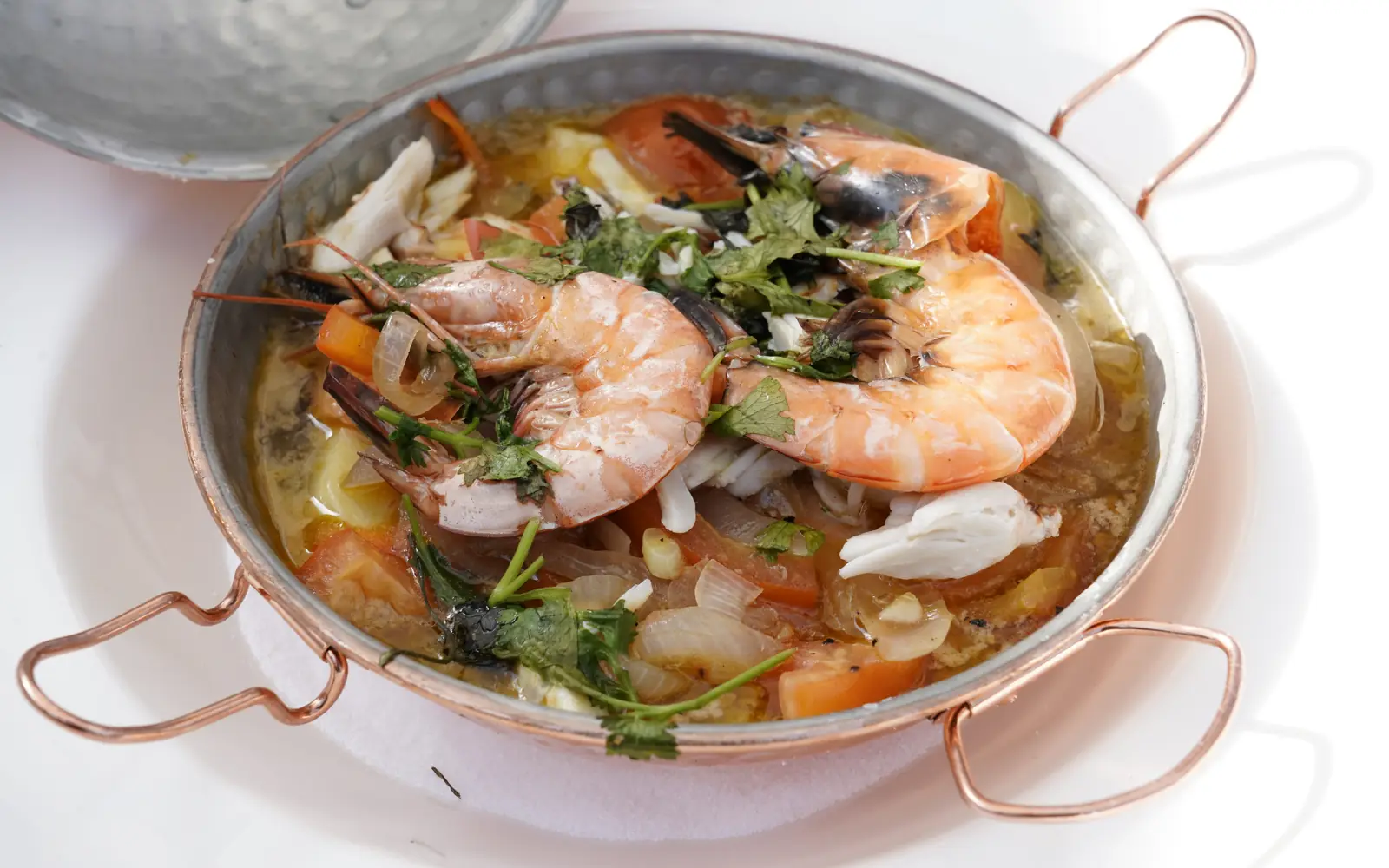
The cataplana
The cataplana is both a dish and the copper, clam-shaped pot it is cooked in, sealed shut so the seafood steams in its own juices. The classic is a seafood-and-shellfish version, though pork-and-clams (carne de porco à alentejana) borrows the same idea. It is a sharing dish — order one between two and mop the sauce with bread. The pot itself makes a fine souvenir, sold in the markets and cookware shops, and a cataplana is the one Algarve dish most worth learning to cook at home.
Fish, clams and octopus
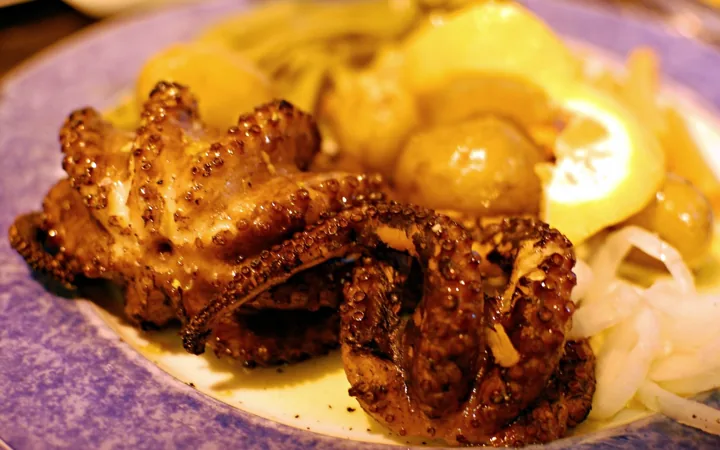
Beyond it, look for amêijoas à Bulhão Pato (clams with garlic, coriander and wine), grilled sea bream and bass, arroz de marisco, and in summer the smoky sardinhas assadas that scent every coastal town. In the east, Santa Luzia bills itself the octopus capital, and its grilled and stewed polvo is worth the trip. The eastern lagoons also give superb clams, oysters and razor clams, farmed and gathered along the Ria Formosa and served barely cooked, the way the shellfish deserves.
The west-coast barnacle
On the wild west coast around Sagres, the prize is percebes — gooseneck barnacles prised from the surf-battered rocks, a delicacy that costs accordingly. It is the most Atlantic thing you can eat in the Algarve.
Almonds, figs and Algarve sweets
The Algarve has a serious sweet tooth, and it is a Moorish inheritance built on the almonds, figs and eggs the region has always grown in abundance.
The Moorish sweet tooth
The famous names are Dom Rodrigo, a twist of fine egg threads and almond in coloured foil; morgado and queijo de figo, dense pressed cakes of fig and almond; and marzipan shaped into fruits and animals. They are rich, tiny and made to go with a coffee or a liqueur rather than to fill you up.
Oranges, carob and honey
The hills also give some of Portugal's best oranges, around Silves, along with carob (alfarroba), almonds and mountain honey that turn up in cakes, ice creams and, increasingly, in modern Algarve kitchens rediscovering their own pantry. Look out for folar at Easter, almond cakes year-round, and the fig-and-almond sweets sold loose in every market — they travel well and make the easiest edible gift to take home.
Coffee and pastries
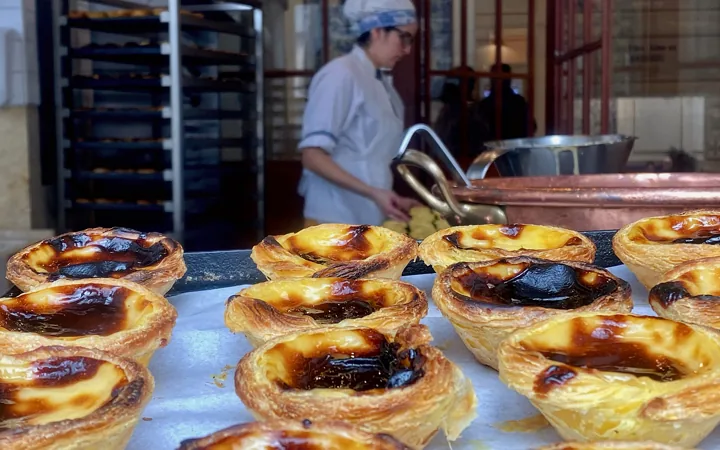
No Algarve meal really ends until the coffee. Order a bica (a short espresso) or a milky galão, and pair it with a pastel de nata, the warm custard tart that is Portugal's national obsession. Every town bakery bakes its own; the good ones come with a caramelised, flaky top and cost small change — the perfect, cheap full stop to a day of eating.
Algarve wine: the region's quiet surprise
Most visitors never think of the Algarve as wine country, which is exactly why it is worth your attention. A small but rising D.O.C. has turned out serious bottles in the last two decades, and the wineries make an easy, uncrowded day out.
The D.O.C. and its grapes
The D.O.C. Algarve covers four sub-regions — Lagoa, Lagos, Portimão and Tavira. Its signature is the native red grape Negra Mole, one of Portugal's oldest, joined by Castelão, Aragonez and Syrah for reds and Arinto and Síria for crisp whites that suit the seafood perfectly.
Wine country: Lagoa and beyond
The old cooperative town of Lagoa is the historic heart, with estates spreading through the hills around Silves and Portimão and a growing cluster of boutique wineries offering tastings and vineyard lunches. It pairs naturally with a morning at Benagil or the beaches and an afternoon inland. Many estates open for tastings without booking, pour a flight of their reds and whites for a modest fee, and sell bottles you will not find at home — and because Algarve wine is still under the radar, you rarely share the tasting room with a crowd.
Medronho and local drinks
Medronho, the mountain spirit
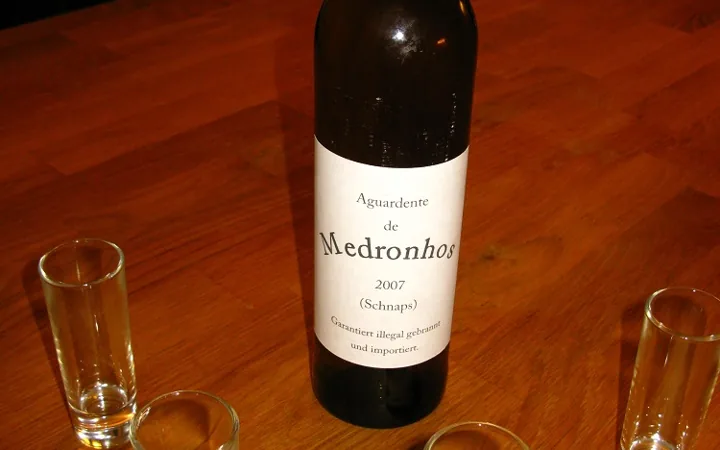
Medronho is the Algarve in a glass — a clear, potent brandy distilled from the berries of the arbutus, or strawberry tree, that grows wild in the Serra de Monchique. The best is home-distilled and unlabelled, poured from a plain bottle in a mountain bar, and it is the traditional end to any inland meal.
Liqueurs and where to try them
Softer options include amêndoa amarga (bitter-almond liqueur) and melosa, medronho sweetened with honey. You will meet all three on a jeep safari into the Monchique hills, which usually builds in a tasting of local honey, cheese and spirits. A word of warning: proper medronho is strong, often well over 40% — sip it, do not shoot it, and never plan to drive afterwards.
The markets
To understand Algarve food, start where the cooks start — the morning market. It is free, it is delicious to wander, and it tells you what is in season faster than any menu.
Olhão and Loulé
The twin brick halls of the Mercado de Olhão, right on the Ria Formosa, are the region's finest, one hall for fish barely out of the water and one for fruit and vegetables. Inland, the Moorish-style Mercado de Loulé is the prettiest building of its kind in the Algarve, busiest on Saturday mornings. Go early, buy some fruit, cheese and bread, and you have a picnic that beats most restaurant lunches — and a free lesson in what the region grows and catches.
Farmers markets and food halls
Beyond the big two, most towns hold a weekly farmers or flea market, and several old market halls now double as evening food halls with stalls and shared tables. They are the easiest, cheapest way to graze through local produce in one sitting.
Petiscos: how a meal works
Eating out here follows its own rhythm, and knowing it saves money and gets you the good stuff.
Small plates and the tasca
Much of the best Algarve eating is petiscos — small sharing plates of clams, cured ham, cheese, grilled cuttlefish or chickpea salad — ordered a few at a time in a plain, tiled tasca. It is the local answer to tapas, and the way to graze through a lot of flavours without committing to a formal three courses.
Couvert, half portions and the daily fish
Two things catch visitors out. The bread, olives and paté brought unasked at the start — the couvert — is charged for, so wave it away if you do not want it. And portions are generous: ask for a meia dose (half portion), and order fresh fish by the kilo from the day's catch rather than off a fixed menu. Do both and you eat like a local, for less.
Food and wine tours worth doing
If you want the shortcut to eating well, a guided tour puts you straight in front of the good stuff and skips the tourist traps.
Food tours and tastings
Walking food tours in Faro, Lagos, Tavira and Olhão hop between markets, bakeries, petiscos bars and a pastry stop, while wine tastings at the Lagoa-area estates pour the D.O.C. reds and whites with a vineyard view. Tuk-tuk and small-group food tours cover more ground for less walking. Browse them in our food and wine experiences.
Cooking classes and cataplana
For something hands-on, cooking classes teach you the cataplana, the arroz de marisco or the region's sweets, often starting at the market to shop for ingredients. It is the souvenir you can actually take home — a dish you will cook again. Half-day classes suit most visitors, run in English at several coastal towns, and end the best way possible: sitting down to eat what you have just made, usually with a glass of the local wine.
Where to eat, by area
The Algarve rewards a simple habit: eat where the boats land and where the locals queue, not where the menu has photographs.
The coast and the resorts
Every coastal town grills fish well, but the marina and seafront strips of the big resorts trade quality for convenience. Walk a couple of streets back from the front in Lagos, Portimão or Albufeira and the cooking — and the price — improve at once. The tell is the clientele: a dining room full of Portuguese families at lunch is worth more than any review score.
The authentic east
For the real thing, head east. Olhão, Santa Luzia, Tavira and Ferragudo are working fishing towns where seafood is the everyday, not the special occasion, and a plain tiled tasca beside the water will out-cook any resort restaurant. Match your base to your appetite.
Booking and timing
The Portuguese eat late — lunch from one, dinner from eight — and the best small places fill fast in summer, so book ahead or go early. Order the daily fish by weight, share a cataplana, and finish with a coffee and a medronho like a local.
The food calendar: festivals and seasons
Time a visit right and the food comes with a party. The Algarve's calendar is full of gastronomy festivals, most of them in summer.
The big food festivals
The Portimão Sardine Festival in August is one of Portugal's largest food events, days of charcoal smoke and live music on the quayside, while Fatacil at Lagoa is the region's big agricultural and food fair. Up in the hills, Monchique celebrates its medronho and mountain produce, and Silves fills its streets with food stalls for a medieval fair each summer.
What is in season
Sardines are at their fat, oily best from May to October; shellfish runs year-round; the Silves oranges come into their own in winter and spring; and the almond trees blossom white across the hills in February, a sight in themselves. Eat with the season and you eat both better and cheaper.
Overrated, underrated: an honest take
Eating well in the Algarve is mostly about knowing what to skip.
- Skip: the photo-menu, all-day-breakfast strips along the busiest resort fronts — they are built for footfall, not flavour.
- Underrated: Algarve wine, the eastern fishing towns, and the humble market food hall — all deliver far more than their fame suggests.
- Worth the fuss: a proper cataplana, a plate of Santa Luzia octopus, and a mountain medronho are the three tastes that define the region — do not leave without them.
The honest strategy is to eat simply and locally, spend on the seafood rather than the setting, and treat the interior and the east as the region's real dining rooms — and to let the market, not the guidebook, tell you what is good today.